The Mindbody Prescription
Dr. John Sarno
A deeper dive into mind-body syndrome and the brain-based origins of chronic pain.
Resources · Updated
Books, prompts, and practices that supported my own freedom from chronic pain, and continue to help others. This page will always be a work in progress.

Dr. John Sarno
A deeper dive into mind-body syndrome and the brain-based origins of chronic pain.
Staci Haines
Explores how trauma is political, and how healing must address both personal and systemic dimensions.
Dr. Nicole Sachs
A practical guide to using journaling and expressive writing as tools for mind-body work.
Dr. Joe Dispenza
I don't fully align with Dispenza's individual-centered framing, but his research offers useful tools for shifting your experience of pain.
Journaling is one of the most powerful tools in this work. Move through these in your own time, there's no right way.
What does your pain feel like?
Describe the physical sensations without labeling them as symptoms. What color, texture, or temperature would you give it?
When did it first appear?
What was happening in your life around that time? What were you feeling? Does it feel old or new?
What makes it better or worse?
Notice patterns. Does it change with stress, weather, relationships, or activities?
What does your pain get in the way of?
What hidden benefits does it give you: attention, rest, protection, avoidance?
How does it move?
Does it shift places or change in intensity? What patterns can you notice?
If your pain could speak, what would it say?
What message might it be carrying?
If your pain had a voice, what tone would it use?
Angry, pleading, sarcastic, scared, demanding, childlike?
Write a direct dialogue.
Pain: "…" You: "…" Let it go as long as it needs, no censoring.
What do you hate most about the pain?
What does it stop you from doing, and how does that make you feel?
What is your pain protecting you from?
If it were gone tomorrow, what might actually feel scary about that?
Write a letter from the perspective of the pain.
Explain why it's here and what it's trying to do.
Write your pain a letter.
Thank it, and explain why you don't need it anymore. Keep reading it until your nervous system is convinced.
Name your anger.
Write the names of people in your life and express your anger at them, in your raw, unfiltered voice.
Write a rage list.
Everything you're furious about, from tiny daily annoyances to the deepest betrayals. Destroy the list later.
Let yourself grieve.
Write about what pain has taken from you, the time, trust, or experiences you've lost.
Claim responsibility.
Write about the ways your mind and body may have created this pain to protect you, and why you're now ready to let it go.
Imagine your life without this pain.
What would you do first? How would your life change?
Write a letter from the free version of you.
Give it a date. Read it every day.
Write a day in the life of your free self.
How do you move, speak, feel, and show up in the world? What does your body feel like?
What has pain taught you that you want to carry into a pain-free life?
Where can you find gratitude?
Come back to this when the pain visits.
A podcast dedicated to understanding and healing chronic pain through mind-body approaches.
The foundational lecture explaining the mind-body connection in chronic pain.
Real stories of recovery from the TMS Wiki community, proof that freedom is possible.
Heartfelt testimonials from people who found freedom through Dr. Sarno's work.
If you're new to this work, these are the pieces I'd read first.
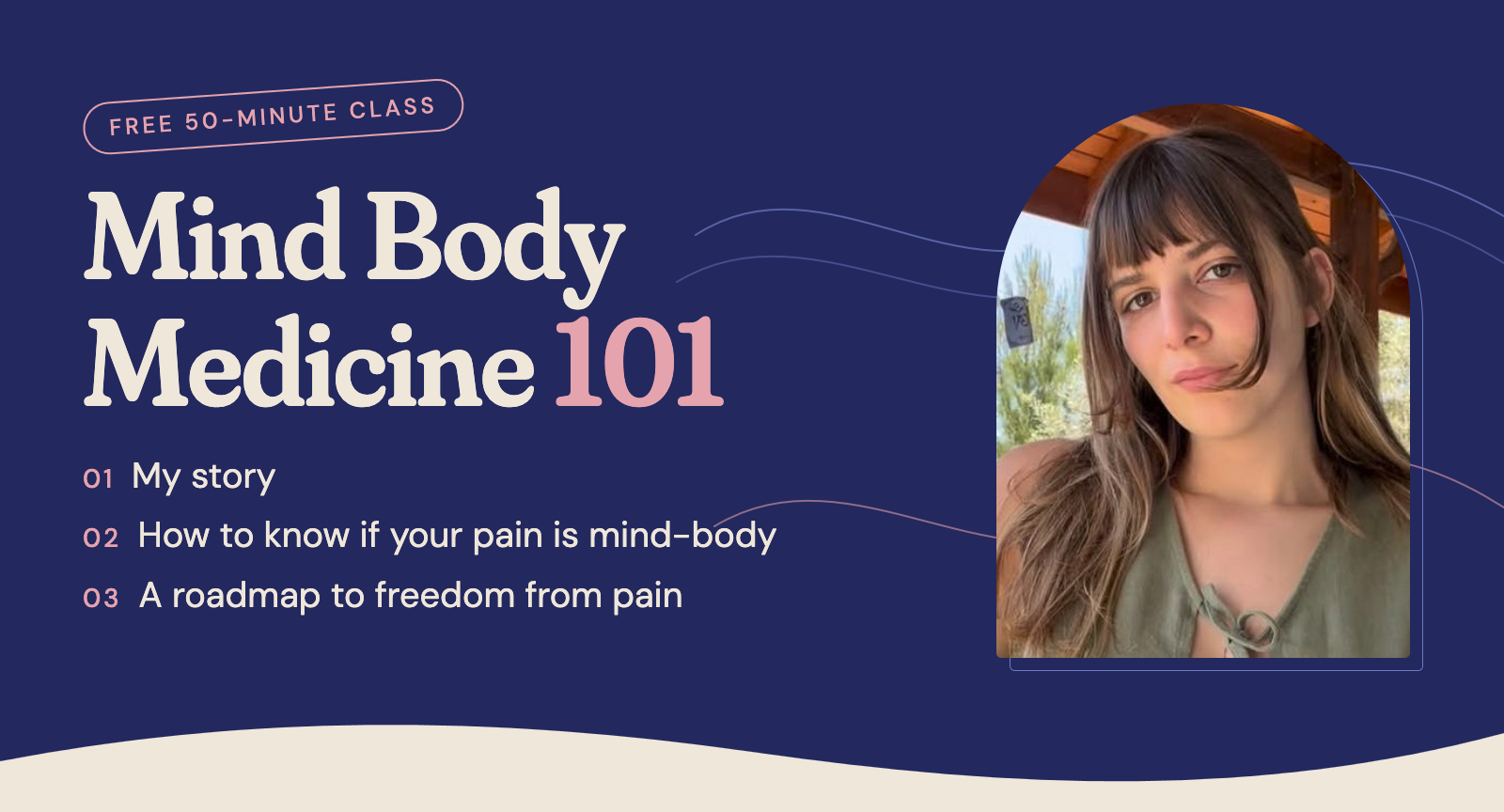
Free 50-minute class
I share my story, explain how mind-body pain happens, help you tell whether you might be experiencing it, and leave you with a roadmap and tools to start working with it.